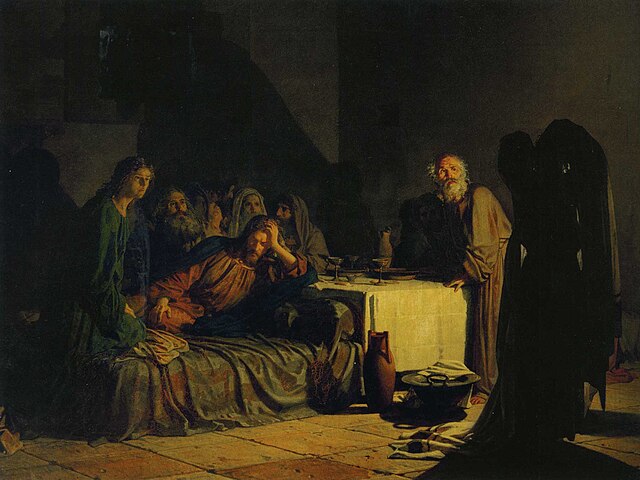
Unpublished Diaries and Notebooks (1872-1876)

Dostoevsky abhors characters and stories that feel “made up.”  “As soon as an artist tries to turn away from truth,” he says, “he will immediately become ungifted and at that very moment will lose all his talent.”

At first, this seems a strange stance for a fiction writer.  How can one tell stories without making them up?  These notebooks themselves are insightful to Dostoevsky’s process.  

First, he scours the news (often crime).  He devotedly kept up with what people were going through in his time and place.  But he didn’t just read the news passively.  When he found something that interested him, he’d try to sketch out possible inner experiences that would’ve led to the criminal’s actions. 

Second, he searches for an image or a sound to embody the specific experience.  “Artistry,” he says, “expresses the idea with image.”  For example, when trying to capture a little girl’s experience when she is beaten by her father, he refers to it as “Papa! Papa!”  More than any idea, hearing her innocent plea brings to life her experience.  

This embodiment at first seems an unnecessary step, but it’s key to preserve the life of the experience.  If he were only to use a concept, he would likely retain the shell of the experience but lose the pecan.  For example, if Dostoevsky’s shorthand of the little girl’s experience was simply a word like “suffering,” it is in danger of becoming an abstraction, divorced from real life, trapped in cold reasoning that can operate independently from love.  This is Dostoevsky’s greatest fear.  “To see them, you must love them.”

Third, he collects these images from all of his experiences—not only the news, but also fiction and painting as well as his own memories.  He likes to cultivate in his notebooks an abundant store of images weighty with meaning.

Fourth, he endlessly shuffles and arranges these images to arrive at a more complex understanding of his time and place.  This allows him to move beyond the closed loop of preconceived notions out toward life itself.  He uses his notebooks to cycle through meaningful sounds and images, feeling out a pattern.  

This pattern is the goal.  Fiction gives form to experience—not only to what we have experienced, but even to what we could experience.  This form is not made up.  It is the pattern that the storytellers seek.  The pattern can’t be acheived through the use of an abstract template.  It must be felt out, known only by its beauty.

Dostoevsky’s form of storytelling is less inventing than assembling.  That isn’t to say that he isn’t constantly inventing, but even his fabrications don’t advance to the final draft unless they adhere to the beautiful pattern.  

Demons (1872)

Part 2

Dostoevsky’s novel Demons escalates to its catastrophe when a group’s cherished political opinions lead them to murder an innocent man.  Soon after the gun fires, one of them, Virginsky, loses his mind and starts screaming, “This is not it, this is not it!  No, this is not it at all!”  Another of them, Pyotr Stepanovich, observes Virginsky’s breakdown and says, “I had quite a different idea of him.”

The tragedy of this story is set in motion by a terrible gap between ideas and lived reality, between speech and soul.  One would think that such a concept wouldn’t make for a successful novel.  After all, a novel is nothing but speech.  But this novel has the uncanny ability to live beyond mere words.  Here’s how it achieves this:

1.  Minimal Commentary

We get very little interpretation about characters’ thoughts and feelings, and when we do, we get it only from other characters—even the narrator is only another character in this book.    This withholding style, on its own, would only make for confusion and coldness.  Dostoevsky balances it, however, with intentional arrangement of the events.  

For example, when Stavrogin leaves his house in the middle of rainy night on a mysterious errand, his servant, Alexei Yegorych, says, “God bless you, sir, but only setting out upon good deeds.”  This statement startles Stavrogin, and he asks Alexi Yegorych to repeat it, which he does.  The statement, the startle, and the repetition all create a point of emphasis.  I sense that Dostoevsky, by bringing so much attention to this line, wants me to bear it in mind.  And so, as Stavrogin sets out into the night, I’m wondering, “is Stavrogin out to do good deeds or bad?”  The emphasis creates a frame for me to interpret his ensuing scenes.  Thus Dostoevsky guides me through a coherent, powerful narrative without ever directly intruding on the mystery of Stavrogin’s being.

2.  Subtext-heavy Dialogue

I’ve never read a book that makes more artful use of subtext than this one.  Hardly ever does a character directly say what they mean.  Even their lies have layers.  When a group of people almost learn about Stavrogin’s secret marriage, Pyotr Stepanovich covers up for him, but intentionally sloppily, because he wants them to wonder if he’s lying.  But across the novel, the disparity between saying and meaning isn’t because every character is unrealistically obessessed with lying.  It’s a demonstration of the truth we all experience.  None of us can fully say what we mean because of the gap between speech and soul.  Thus Dostoevsky is able to use subtext to show the layered nature of a human being, which brings out the beauty of people even when they’re behaving in irritable, absurd, or cruel ways.

When I tell someone what this novel is about, it sounds as though the book is full of horrible people.  But when I get that response, I immediately think, no, it’s full of dear people.  There’s a sort of preciousness to most of the characters.  I care about them, even as they do some of the worst things people can do.  A good example of this is Marie Shatov.  She’s never anything but irritable and rude to her husband, but because of little hints, I know that is not it.  It’s not it at all!

These two techniques allow Dostoevsky to show respect for the mystery of being and to make space for subtleties of experience.  With this approach, characters can do what the character Kirillov calls “feeling thoughts.”  He describes people as having many thoughts with them all the time, but then suddenly, they’ll be able to feel a thought in a new way.  The thought itself isn’t new to the person, only the feeling of it.  This depiction of the stream of consciousness seems much more true to life than the sentence-transcription we’re used to getting from novels.

This approach also makes possible another unique aspect of Dostoevsky’s fiction.  His appeal is paradoxically wide.  His work is beloved by atheists and theologians, by easterners and westerners, by conservatives and progressives.  The space he makes for his characters also makes space for the readers.  This allows his novels to function as a meeting place between different worldviews.

This is an important skill for a novelist.  An author must present the novel’s world truthfully, but not with such certainty that no reader can access it unless they possess identical, idiosyncratic opinions to the writer.  A novel is a shared experience, and for it to be so, it must be a meeting place between the perspective of the author and the perspective of the reader.  It must resist the temptation of pet interpretations to reach for shared experience.

Demons (1872)

Part 1

Dostoevsky’s Demons is such a complex novel that it can be read many different ways.  This time reading it, I was struck by a similarity it shares with his previous masterpieces: Notes from Underground, Crime and Punishment, and The Idiot.  All of these books are preoccupied with the question, can people change?

In Notes from Underground, the Underground Man has an intense desire to be good, but is blocked by his own hangups.  Liza offers him a new life, but he is unable to take it.  In Crime and Punishment, Raskolnikov vascilates between wanting to lovingly connect with others and wanting to separate to become a superman.  Sonya helps him undergo the humility of surrender.  In The Idiot, Nastasya Fillipovna struggles between spiteful self-destruction to revenge herself against her oppressors and the willingness to accept love.  Myshkin desires to help her toward love, but the act of renouncing her pride proves too much for herself and she throws herself into the power of her murderer.  Though Myshkin’s project seemingly fails, the seeds of goodness he planted spring up in unexpected places.  

In all of these, a character is suspended between good and evil.  Some characters are wooing them toward the good, others toward the evil.  

Demons is much the same.  Stavrogin has done horrible things and is tormented by his past.  Over the course of the novel, two paths are offered to him and he is unsure which to take.  

The first path is presented by him primarily through Pyotr Stepanovich.  He aspires to make Stavrogin into a leader of a political movement.  The movement seems to have begun from an honest desire to bring greater equality into their country.  The thinkers of this movement are convinced that the only way to bring about this new, just society is to topple the current order.  This use of destruction as a means to an end has a strange effect on Pyotr Stepanovich.  He and his followers find themselves enamored with destruction and start to revel in breaking anything considered honorable in the old order—everything from putting pornography into Bibles to sneaking food off the plate of a boy who just killed himself to celebrating cheating spouses and womanizers to talking rudely to authority figures.  This fervor leads them to senslessly burn down a village.  

This strange intoxication that can come from embracing destruction is best articulated by the narrator’s description of the experience of watching a dangerous fire.  It produces in the spectator “a sort of brain concussion and a challenge, as it were to his own destructive instincts . . . this gloomy sensation is almost always intoxicating.”  Stepan Trofimovich adds, “I really do not know whether it is possible to watch a fire without a certain pleasure.”

And once destruction for the noble cause is underway, Pyotr Stepanovich can’t resist the temptation to use it to settle petty personal scores.  The political group’s activities culminate in the murder of Shatov, whom there was no real reason to murder except that Pyotr Stepanovich had a grudge.  

The second path is presented to Stavrogin at different times by Shatov, Kirillov, Dasha, and (in a chapter that was suppressed) Tikhon.  He is intensly interested in this path for much of the novel because through it he hopes to find relief from his demon (a regular hallucination he has of a young girl he had sexually assaulted and who, as a result, had hung herself).  

He tries to make amends to Gaganov, a man he offended, by accepting his challenge to a duel and letting Gaganov shoot at him while Stavrogin, on his turn, intentionally misses.  This only aggrivates Gaganov further.  After the duel, Stavrogin tells Kirillov “I did all I could.”  Kirillov disagrees.

“What should I have done?”

“Not challenge him.”

Take another slap in the face?”

“Yes, take a slap.”

Here Stavrogin starts to see what will be required of him to change.  He hopes to change simply through a show of willpower—a quality he has in abundance.  But what is required costs him more: humiliation.

In the suppressed chapter, Stavrogin hopes to free himself by authoring a grandiose, public confession.  Tikhon tells him that path won’t lead to freedom because he will still be able to maintain his pride.  Tikhon suggests that the only path to freedom for Stavrogin to accept ridicule.  It’s significant here that the name Stavrogin comes from the Russian word for “cross.”  The only way forward for Stavrogin is the way of the mocking purple robe and the crown of thorns.  

This is exactly what Stavrogin is unwilling to do.  He can endure anything but laughter.  Tikhon suggests that Stavrogin is like his mother, Varvara Petrovna.  The narrator wonders if “the demon of the most arrogant pride took possession of [her] precisely when she had the slightest suspicion that she was for some reason considered humiliated.”  She rejects her lifelong love out of pride.  Stavrogin, too, rejects this path out of pride, and this decision leads to the death of his wife, Marya, and her brother; of the woman he loves, Liza; of two of his greatest friends, Kirillov and Shatov; and of himself, through suicide.

And yet, even though this novel ends with the death of so many, the effect of the story isn’t one simply of pessimistic horror.  The glimmer of hope can be seen in one of the novel’s epigraphs, taken from the eighth chapter of Luke’s gospel:

“Now a large herd of swine was feeding there on the hillside; and they begged him to let them enter these.  So he gave them leave.  Then the demons came out of the man and entered the swine, and. the herd rushed down the steep bank into the lake and were drowned.  

“When the herdsmen saw what had happened, they fled, and told it in the city and in the country.  Then people went out to see what had happened, and they came to Jesus, and found the man from whom the demons had gone, sitting at the feet of Jesus, clothed and in his right mind; and they were afraid.  And those who had seen it told them how he who had been possessed with demons was healed.”

Toward the end of the book, Stepan Trofimovich connects this story to the events of the novel.  And this is echoed in the conclusion, where so many of the characters (Shatov, Kirillov, Stavrogin, and several others, including Stepan Trofimovich himself) seem to run away and destroy themselves.  In other words, many of the novel’s characters are parallel to the swine in the gospel.  

But this begs the question—if these characters are the swine, then who is the man that is now free from the demons? The village itself, which, throughout the novel, is always getting the events wrong with its inability to nuance, has parallels to the freed man, when, in the conclusion, they “rested, relaxed, recovered” after the chaos is over.  

And, interestingly, two of the “swine,” though they both die, also seem to undergo healing.  One is Shatov.  When his wife unexpectedly returns and promptly gives birth to another man’s child, goodness bursts upon him.  He sells his revolver and is consumed with generosity and joy.  He is overcome with love for his wife and for the great mystery of a new being coming into the world, even when it is greeted with cursing and blasphemy.  

The other is Stepan Trofimovich.  He confesses his love for Varvara Petrovna, he renounces his sponging off of her, and he undergoes an (albeit absurd and ambiguous) conversion.  

What these three—the village, Shatov, and Stepan Trofimovich—all have in common is that they are all ridiculous.  They are the clowns of the book.  Shatov’s hair always sticks up in the back, which keeps us from ever totally taking him seriously.  Stepan Trofimovich is a soppy goof from start to finish, and the public opinion of the village is a running joke.  But in this novel, humiliation is the path to the freedom of humility.

The Notebooks for The Possessed (1869-1872)

More than any of Dostoevsky’s previous writings, the Notebooks for The Possessed show his exploration of political ideas.  He seems to have set out to try to demonstrate the problems of the social utopianist beliefs of many of the leading Russian intellectuals at the time, (people like Chernechevsy, who Dostoevsky satirized in Notes from Underground).  

Dostoevsky loves to explore implications.  If one lives this way, his novels seem to say, where will it lead?  He notices among his contemporary thinkers a desire to create a just society without any reference to God.  He believes that this could lead to cruelty.

He pictures it like this: say there were two neighboring farmers, and one of the farmers had a fire that destroyed all he had.  And say the other farmer decided to make sacrifices on his farm to give half of what he had to his suffering neighbor.  This act is beautiful.  But to take this act and convert it into an abstract concept that is then made into a political system, could, as Dostoevsky saw it, lead to cruelty.

Why?  Say we call this abstraction “equality.”  If a government were to try to restructure their society around this concept, how could the government discern how far to go with it, if the concept itself is their only guide?  Literacy makes people unequal—why not burn the books?  Talent makes people unequal—why not yank Michael Jordan off the court?  Beauty makes people unequal—why not disfigure or eliminate the beautiful?  Obviously, there are situations in which illiteracy, mediocrity, and plainness can’t be done away with (without doing away with people), so for there to be equality, the higher end must be lopped off.  If abstract principles are our only guide, nothing stops them from taking us to inhumane places.  

He has the same misgivings about trying to solve societal problems by bolstering the economy.  By encouraging everyone to focus on money, people are more likely to become envious and demanding rather than harmonioius.

Dostoevsky claims that people can’t be made to get along by simply restructuring their environment or by educating them with a certain ideology.  An emphasis on material comforts might lead to a fixation on obtaining more material comforts.  Learning about equality is just as likely to make someone more demanding as more giving.

According to Dostoevsky, societal harmony can’t be acheived by a rational system imposed on an individual from without.  If people are to get along, the motivation must arise from within.

So how does he think this could happen?  Granted the notebooks are largely comprised of his characters speaking, but from what I can gather, he seems to think that there’s only one real solution to societal problems: following Christ.  He often baldly states that if the individuals in a society are not following Christ, then that society will decay.  And conversely, “If one humbly follows Christ, all problems would be solved . . . Christianity contains the solution to all social and moral problems,” and the economy would take care of itself, because “if everyone was Christ, how could there be poverty?”

But what does that phrase “following Christ” mean to Dostoevsky?  How does it differ from shooting after a concept like equality?  He calls Christ the “ideal of beauty and goodness.”  If only God was good and beautiful, regeneration would become a mere daydream, but since Christ became human, we know that humans can become good.  To know that goodness is possible, we need an ideal with a face.

What are the characteristics of this goodness?  Here’s how Dostoevsky describes it: finding one’s individual happiness in “voluntary and self-desired renunciation of his individuality, if others would benefit from it.”  He sums up this goodness as “a slave yet free.”

Okay, but how is that just not another abstraction?  Because it comes about in a relational way as opposed to rational effort.  Dostoevsky claims that “man does not have the strength to save himself.”  The solution is “God’s miraculous intervention.”  How this works exactly is not laid out in the notebooks.  

At first this seems to be just as out-of-touch as Chernechevsky’s utopia.  After all, there have been Christian societies, and they were less than wonderful.  But Dostoevsky is careful to point out the gap between believing in Christ and following Christ.  Merely believing in Christ doesn’t change much because “faith is dead without deeds.”  Or, perhaps more precisely, if someone isn’t following Christ with deeds, that belief may be largely imaginary.

And this is the question the characters in the notebooks worry over.  Say it’s true that all would be dandy if we just believe in Christ—is it possible for just anyone to believe like that?  How does one get there?  

Dostoevsky thinks that part of the problem is that our image of Christ has become blurred by Western secularization.  These ideas of mapping out a just system that would have no need for God came from nonreligious thinkers in the West.

But, according to Dostoevsky, not only has the image of Christ become muddied by these atheists, it also has been muddied by the two branches of the Western church: Catholicism and Protestantism.

Dostoevsky believes that the image of Christ has become distorted in the Catholic church because it became so entangled with wealth and political power.  This flirtation with Mammon obscured its spiritual sight.

Dostoevsky also believes that the Protestant church lacks a sufficient commitment to tradition, which renders it too vulnerable to the atheistic currents of the secular West.  Because the Protestant church lacks ceremonies to keep a firm hold on the image of Christ, it inevitably drifts toward the temptations of looking to wealth and human reason for social flourishing.  Thus the Protestant Church quickly becomes (in any practical sense) indestinguishable from atheism.  He also believes that because Protestants are so eager to topple any notions of heirarchy, their thinking veers toward atheism because for God to be God, He must be a higher being, which is pretty darn undemocratic.

Dostoevsky believes the Orthodox Church to be different.  Its historic suffering made it less vulnerable to the temptations of money and political power, thus it has mantained a hold on the purest image of Christ.  So Russia, as the primary holder of Orthodoxy, has something crucial to offer the rest of the world.  The very poverty and barbarousness of Russian history made it a more capable holder of Christ’s image.

As a Protestant Westerner, I can’t help but think that Dostoevsky has overlooked some of the tremendous ways that the Holy Spirit has worked through the Catholic and Protestant Churches (and perhaps even through the atheists).  But I also find his astonishingly high view of Christ’s role in social justice a welcome challenge.  I can’t help but think while reading that as a Protestant Westerner, I have blindspots that Dostoevsky can help point out.  

Dostoevsky is eager to avoid treating Christianity as a sort of hobby, something that has no place in my worldly affairs, but is something I idly muse about after dinner to “aid digestion.”  His challenge is this: let’s get honest about what we’re really hoping for in our society.  How much of it is just plain, old-fashioned Mammon-worship?  We say that Christ is important, but how important is He?

What’s striking about all these thoughts is how few of them actually made it into the novel.  These notebooks can be read almost as a sloughing off of Dostoevsky’s ideas to get to the living characters of the story.  This can be most clearly seen in the development of the character Pyotr Stepanovich Verkhovensky.  He starts out as an embodiment of Chernechevsky’s ideas.  Dostoevsky seems to want to show through him that atheistic socialism can lead to cruelty.  But by the end of the notebooks, this isn’t who Pyotr is at all.  In fact, Pyotr shows distain for such abstractions.  Pyotr becomes this sort of mindless craving for destruction that has little to do with political theory.  Like Dostoevsky, he despises hobbiest theoreticians and “faith without deeds,” but this unleashes in him a thirst for chaos which is perhaps best termed demonic.  In Pyotr, what started as a journalistic polemic became something mysteriously alive.

Edward Wasiolek, the English editor of these notebooks, says that “Dostoevsky’s genius lies [ . . . ] in his creative capacity to sacrifice what he wants for what must be.”  If I suspect the people who hold to the other side of an issue are stupid, Dostoevsky reasons, then I must be willing to consider the inverse: maybe I’m stupid.  After all, if someone were stupid, they probably wouldn’t know it.  This is the comical side of any debate.  Thus Dostoevsky’s genius lies in his ability to admit that he might be stupid.  And so, with his characteristic wariness of clutching ideology too tightly, Dostoevsky is even willing to relinquish his own in the face of human mystery.

Letters (1872-1877)

Dostoevsky criticizes the literary world of his time for being conventional, ambiguous, phony, dull—in short, lacking in sincerity and directness.

Why?  He thinks that this is what happens to writers who are too afraid of appearing ridiculous.  Sometimes the truth of one’s experience is laughable, and if one becomes too preoccupied with avoiding mockery, one could back oneself further and further away from the truth of experience.

Separation between writing and experience is dangerous.  Dostoevsky calls a literary event a social fact.  He believes that a prominant literarary critic’s ideas in the 1840s contributed to a horrific political murder in the 1870s.

To combat this, Dostoevsky is strikingly committed to candor, even in his letters.  “Artlessness is the only thing I can boast of,” Dostoevsky writes, “even though it makes people laugh.”  His letters during this period are characterized with abrupt frankness, from criticizing a stranger’s handwriting to praising a teenager’s love of her parents.  Even the way he writes to his wife, Anna, seems to change during this time and become more openly affectionate.  He’s interested, even in his most unliterary communications, to do away with the white lies of form and etiquette, to only say what he means.

Though he isn’t afraid to tell correspondents what he thinks, he’s also honest enough to recognize that he doesn’t know everything.  These letters are characterized by a depth of interest in and a desire to learn from even the most random-seeming strangers.  He’s rarely content to rely solely on his imagination and experience to create his characters.  He goes out of his way to research personalities, especially at criminal trials.  He also studies his fan mail carefully, attending their words with a desire to learn from them, even (or perhaps especially) the young.  Dostoevsky is invested in staying in touch with his time.  He complains that Goncharov, who he considers to be a towering talent and intellect, has crippled his writing by not actively trying to understand the rising generation.

One issue in particular Dostoevsky feels that many of his contemporaries are getting wrong: something he calls “Pure Beauty.”  He thinks of this Beauty in terms of generosity.  There was a popular idea at the time that all bad behavior stemmed from poverty, and so if a society eradicated poverty, there would be no more crime.  

Dostoevsky disagrees with this idea.  He compares it to the devil’s first temptation of Christ to turn stones into bread.  He cites Christ as revealing something key about human nature: “Man does not live on bread alone.”  Dostoevsky interprets this as meaning that people’s need to show generosity is deeper than their need for material security.  He sees the generous impulse as the only way a human being can experience personality and freedom because without it, we would be mere instincts demanding satisfaction, like animals.  To be reduced to this state of being for a human is to despair.  He claims that the difference between saying “I must share with you” and “you must share with me” is the difference between life and death.  The first recognizes one’s need to show generosity, and the second is fixated on money, and fixating on money leads to greed.  

If we merely focus on eradicating poverty, Dostoevsky says, we will still not eradicate crime because we will be ignoring the deeper need.  His novels show again and again that people can be cruel out of boredom.  But if we focus in what he calls the Ideal of Beauty, then we will work for each other, and poverty will diminish as a result.

In one letter, Dostoevsky councils a young girl who desires to go to medical school so she can help people, but her father is against it.  Don’t sacrifice your convictions, Dostoevsky advises, but “be tolerant and compassionate toward [your parents] . . . Therein is a real feat of philanthropy, and there’s no point in longing to go somewhere far away for a feat of philanthropy when most often of all it is right in our own home, right before our eyes.”  

Dostoevsky’s commitment to honesty always comes back to this same principle: don’t love an abstract cause at the expense of loving your neighbor.

The Eternal Husband (1870)

Velchaninov, the protagonist of Dostoevsky’s novel, The Eternal Husband, is haunted by his conscience.  A part of him knows that he has done wrong and has a longing to make it right.  Trusotsky, a man whom Velchaninov had cuckolded, suddenly reappears in Velchaninov’s life.  

Velchaninov is a serial adulterer, and one of the ways he copes with this lifestyle is by seeing the husbands a lesser beings.  He believes that certain men are “eternal husbands”—“only husbands in life and nothing more. . . Such a man is born and develops solely in order to marry, and having married, he immediately turns into an appendage of his wife . . . He cannot help but [be a cuckold].”

But when Velchaninov finds out that Trusotsky’s wife has died and that Velchaninov is the real father of her daughter Liza, Velchaninov finds himself having to interact with Trusotsky.  This causes a great deal of dissonance within Velchaninov.  His ego, in order to justify itself, needs to continue to see Trusotsky as a lesser man.  But his conscience, though deeply buried, has a need to reconcile.

In some ways, Velchaninov’s ego has an easy time of dismissing Trusotsky because much of Trusotsky’s behavior is repulsive.  Trusotsky, tormented by Liza’s parentage, horribly mistreats her; he also has lapsed into a grotesque lifestyle of drinking and soliciting prostitutes, and he is planning to force fifteen-year-old Nadya to marry him by exploiting her family’s financial situation.

Velchaninov has to see Trusotsky as a lesser being—if he doesn’t, he must face that his own behavior betrayed a sensitive soul who cared for him as a friend, and he fears that this admission would make himself a lesser being.  It would be to willingly concede the moral high ground.

Velchaninov and Trusotsky compete against each other in two ways—to hold the position as the more desirable by women, and to hold the moral high ground.  They both fear weakness.

When Velchaninov is actively cheating, he’s unconcerned with moral questions because he thinks dolts like Trusotsky are just asking for it, but once he discovers that Trusotsky is mistreating Liza, he loses his moral indifference.  He then judges Trusotsky as morally inferior—and this allows him to continue to justify his adultery.  What’s adultery, after all, next to child abuse?  Velchaninov tries to tell himself that he no longer needs to apologize.  Who apologizes to a monster?  They’ll only exploit your vulnerability.

But a few things happen that shake Velchaninov’s position on the moral high ground.  First, Trusotsky reveals, with genuine tears, that Velchaninov was his dearest friend.  Second, Velchaninov finds himself impulsively flirting with Nadya, Trusotsky’s fifteen-year-old fiancée.  Velchaninov’s desire to compete for moral advantage still can’t inhibit his desire to compete for sexual advantage.  

Velchaninov sees this and is appalled with himself.  The grotesqueness of Trusotsky’s engagement has now splattered onto Velchaninov.  And after Trusotsky attempts to murder Velchaninov, Velchaninov realizes that he had been welcoming Trusotsky to retaliate in some way so that Velchaninov could reassume the higher moral ground.

When Lobov, Nadya’s true beloved, comes and accuses Trusotsky of injustice, Velchaninov can’t help but feel also accused—and the more he sees Trusotsky’s predatory evil in himself, the less he is able to distance himself from Trusotsky by labeling him as one of “those men,” which in turn means he is less able to justify the pain he caused Trustotsky.

What is it that causes Velchaninov to change?  It’s something subconscious.  The day he went to make amends to Trusotsky, the narrator says he woke up with an “unexpected horror,” that he “would today, himself, of his own volition, put an end to everything by going to see [Trusotsky] . . . Why?  To what purpose?  He knew nothing of this and, in his disgust, did not want to know, but only knew that for some reason he was going to drag himself there.”  Velchaninov seems compelled to make amends by some hidden force within himself, similarly to how he was compelled to flirt with Nadya.

Velchaninov wars against this impulse.  He calls it “madness”; he’s ashamed of it.  Yet it seems to have been present within him the entire novel.  The book opens with guilty memories haunting him.

This is how much of the drama works in the novel.  The conflict is engineered in a way to force that which is latent in Velchaninov to become unmasked.  This can be seen in microcosm in the scene where Trusotsky invites Velchaninov to meet his teenage fiancée.  The conflict of the scene is simple on the surface: Trusotsky wants Velchaninov to go—Velchaninov doesn’t want to go.  But as the argument progresses, the narrator tells us that

“Velchaninov still refused, and all the more stubbornly for sensing inside himself one difficult, malicious sort of thought.  This evil thought had begun to stir inside him already long before, from the very beginning . . . whether it was simple curiosity or some as yet quite unclear attraction—but he felt drawn . . to agree.”

Drama often works in the novel as a A versus B conflict, which is then unexpectedly resolved by a third element, C—something that had been there the whole time but had lain dormant until the conflict forced it forward.  This C element flips the A-vs-B dichotomy on its head and reveals the characters to be more complex than this original clash suggested.  

What’s fascinating about Velchaninov is that he doesn’t have simply one hidden desire in his subconscious that he won’t face.  He has two, and they are at war with each other.  He has a dark desire to prove himself superior to Trusotsky, both morally and sexually.  His dark desire wants the impossibility of being both a predatory power and a moral power. Dark desires are usually contradictory because they’re inherently at odds with Reality. “Purity of heart,” Søren Kierkegaard says, “is to will one thing.” And both sides of this dark desire are perhaps fear-responses to the ego-deflation that his light desire would cost him. His light desire is to have a brotherly reconciliation with Trusotsky.  

Both characters are trapped in a cycle of domination and humiliation, a cycle which can only be broken by a humble admission of wrong.  Both characters are repulsed by this humility, yet at the same time have a buried yearning for it.

But when Velchaninov finally does hold his hand out to Trusotsky, Trusotsky too seems to be asking for forgiveness (albeit in a subtle way).  Admission of wrong—at the point of weakness—is where they are finally able to meet human-to-human.

The Idiot (1868)

In his novel, The Idiot, Fyodor Dostoevsky is interested in getting closer to reality, the ground beneath our feet.  But how do we get there?  The novel’s hero, Myshkin, says, 

“I know about an actual murder over a watch, it’s in all the newspapers now.  If a writer had invented it, the critics and connoisseurs of popular life would have shouted at once that it was incredible; but reading it in the newspapers as a fact, you feel that it is precisely from such facts that you learn about Russian reality.”

True facts that no one would believe in a novel are key facts to understanding my time and place because they are the very facts I’m overlooking.  It’s the incredible-but-true facts that show me my own blindness.  Hunting out such facts allow Dostoevsky to move beyond the usual blurry truisms to shocking insight.

These buried facts often have to do with something within me that I don’t want to face.  For example, Lebedev claims that “the law of self-destruction and the law of self-preservation are equally strong in mankind!”  This is hard to accept because it’s so unreasonable, and I like to think of myself as reasonable.  But again and again, Dostoevsky exposes me to behaviors that seem implausable on paper, but when I examine my own experience, they ring true.  Things like enjoying irritation, being ashamed of my compassion, and my resistance to accepting good fortune.  

This unreasonable side of human nature is best articulated in the novel when Keller has a thought to make a confession to Myshkin in order to help himself mend his ways.  But at the same time, he has the thought to use the confession to soften Myshkin up to borrow money from him.  Myshkin says that he has these simultaneous good and bad thoughts often, and he calls them “double thoughts.”

I’m not used to seeing myself with such complex accuracy.  Such lucidity is difficult to acheive because I often bury the bad thought with rationalizations.  So in order for me to reach clarity about reality, I must cut through these rationalizations.

Perhaps the most disturbing character of the novel is Totsky, who has nestled himself into his own flab of rationalizations.  He sexually assaulted Nastasya Filippovna when she was a child, and he constantly minimizes this to himself.  He obscures his cupability by calling it an “occurance.”  He says he can’t be blamed for his behavior because he is “an inveteret sensualist” and “not in control of himself.”  He says that “she herself was my best defense against all her accusations.  Well, who wouldn’t be captivated by this woman on occasion to the point of forgetting all reason . . . and the rest?”  When asked to confess the worst thing he ever did, he (in Natasya’s presence) self-satisfiedly tells a light anecdote about giving a woman a bouquet before someone else could. 

What renders Totsky’s rationalizations more disturbing is that the narrator participates in them.  Twice the narrator refers to Totsky as an unerring connoisseur of beauty, and he takes every opportunity to wax eloquent about how perfectly decent, dignified, and respecable Totsky is.  The narrator describes him as “an impressive, stately man” and that “one could not have enough of gazing at his plump white hands.”  The narrator calls Natasya Filippovna’s revolt against her treatment as “some sort of romantic indignation, God knows against whom or why, some insatiable feeling of contempt that leaps completely behind measure—in short, something highly ridiculous and inadmissible in decent society.”

This attitude toward Totsky is not Dostoevsky’s.  A dear childhood friend of Dostoevsky’s was abused and murdered, and he considers child molestation the worst crime possible.  The narrator’s playing up of Totsky’s rationalizations is a technique.  By going out of his way to emphasize Totsky’s respectability, Dostoevsky stokes inside me an even deeper sense of Totsky’s injustice.  Not only has Totsky wronged Nastasya, but everyone, even the narrator, is punishing her instead of him.  

This technique also brings me closer to Totsky.  If the narrator had decried him as a monster at every turn, I could distance myself from him.  But since the narrator lures me into the fleshy folds of Totsky’s minimizing, I can’t help but notice that it feels all-too-familiar.  It makes me wonder—what am I minimizing?

Of all The Idiot’s characters, Totsky is at a far end of the spectrum.  He has little sense of having double thoughts because the strength of his rationalizations has so drown out his awareness of bad thoughts.  That said, the very fact that he so regularly repeats these rationalizations indicates that he still has a conscience that he is trying to shout down.  

All of the characters vary in their awareness of their double thoughts.  Myshkin is perhaps the most aware.  When Myshkin tells Aglaya about double thoughts, she understands immediately.  “Prince Sch. and Evgeny Pavlych don’t understand anything about these two minds,” she says, and she mentions that her mother, Lizaveta Prokofyevna, understands.  

Nastasya Filippovna also has this awareness.  After she tortures Ganya by getting his father (an embarrassingly compulsive liar) to humiliate himself, Myshkin says, “You can’t be the way you pretended to be just now.”  Nastasya responds: “He guessed right, in fact, I’m not like that.”  This hints that Nastaya has two sides, and that she knows it.

The world of The Idiot is one in which every character is both good and evil, and every moment they have a choice on which thought they will act.  Or do they?  How much choice they have is unclear.  Many want to do good but feel unable.  

And this is the main tension of the novel.  Nearly every page is a pang of hunger for what might be called resurrection.  But how is it to happen?  As I read, I find myself hoping that it will happen through Myshkin.  I can’t be with him long without admiring his generosity, his readiness to forgive, and his ability to see the good in others.  When in Switzerland, he brought joy to the last days of an ostracized woman, Marie.  He has a remarkable capacity for happiness.  The way he loves Aglaya is simply by being delighted with her presence.  

I can’t help but wonder if Dostoevsky hopes for something similar.  He mentions in a letter to his niece that with Myshkin he wants to create a beautiful human being.  And years earlier, he declares that “beauty . . . is always useful.”  In the same essay, he writes:

“Suppose . . . that a certain man . . . had a look at the Apollo Belvedere and the god had imprinted himself in the young man’s soul by his majestic and infinitely beautiful image.  A seemingly unimportant fact: he stopped for a couple of minutes to admire the beautiful statue and went away. . . Perhaps a kind of internal change takes place at the impact of such beauty, at such a nervous shock, a kind of movement of particles or galvanic current that in one moment transforms what has been before into something different, a piece of ordinary iron into a magnet.  There are, of course, thousands of impressions in the world, but, surely, it is not for nothing that this sort of impression is a special one, the impression of a god.  It is surely not for nothing that such impressions remain for the rest of one’s life. . . Who knows whether among the many reasons that made him act one way and not another there was, unconsciously, his impression of the Apollo Belvedere he had seen twenty years earlier?”

Dostoevsky seems to believe, or at least to hope, that the mere image of godlike beauty can be transformative.  Halfway through The Idiot, Ippolit tells a story about a little old general who spent his life giving money and supplies to prisoners.  Ippolit speculates on what impact the old general had on the prisoners.  He says “they did not remember him all that warmly or in a very serious way.”  But some of the most hardened criminals 

“suddenly, out of the blue, at some point, and maybe only once in all of twenty years, would suddenly sigh and say: ‘And what’s with the little old general now, can he still be alive?’  He might even smile as he said it—and that was all.  But how do you know what seed has been sown forever in his soul by this ‘little old general’ whom he had not forgotten in twenty years?”

Myshkin also has a deep desire to help others—to transmit the goodness he has, or at least to plant seeds.  The question is, how effective is he?  Everyone is wondering this.  When he becomes engaged to Aglaya, her family can’t decide if he will be good for her or not. 

Even Myshkin doubts his ability to be helpful.  This must be partly why his heart sinks as he proposes to Aglaya.  Myshkin is perceptive enough to know when his efforts will acheive nothing.  Even though he knows nothing good will come from Aglaya’s confronting Nastasya Filippovna, he does little to stop it because he can perceive her determination.  Yet he doesn’t give up hope.  If he had, he would’ve left them all when he had the chance.

And indeed, at first, Myshkin’s ability to help others seems possible.  In a matter of minutes, he has a positive effect on the Epanchins’ valet.  But his biggest project is Nastasya Filippovna.  Her full name, Anastasia, means “resurrection.” Many times, the goodness in her—or as Myshkin would frame it, who she really is—seems to be getting the upper hand.  Nastasya wants to be good like Myshkin is.  She wants to stop living only and always out of hurt pride and to do something good.  Her desire to reliquish him to Aglaya seems to be an effort to “resurrect.”  She does relinquish him (though too late for him to be with Aglaya), but she immediately throws herself into the power of Rogozin, who to her can only mean despair.  As she foresees, Rogozin murders her.

When Myshkin finds her dead body, the narrator describes it in a way that makes me recall a painting that recurs throughout the novel: Hans Holbien’s “The Body of the Dead Christ in the Tomb,”  in which Christ is a rotting corpse, with no hint that a resurrection is coming.  So when Nastasya is described in similar terms, I find myself longing for Nastasya to have some sort of resurrection—for her to have received Myshkin’s goodness in some way. 

But the novel ends on a Holy Saturday.  Resurrection isn’t seen, only longed for.  In a central passage in the novel, Ippolite says, 

“Columbus was happy not when he discovered America, but when he was discovering it; you may be sure that the highest moment of his happiness was, perhaps, exactly three days before the discovery of the New World, when the mutinous crew in their despair almost turned the ship back to Europe, right around!”

The Idiot encapsulates just such a moment—that despair, that death, that anticipation, right before the discovery of the New World.

But in the epilogue, Dostoevsky examines his characters to see if Myshkin managed to plant any seeds.  Most of the characters (Lebedev, Keller, Ganya, Ptitsyn, and Ippolit) remain unchanged.  Kolya, however, has “one of those impressions that remain forever and mark a permanent break in a young man’s life.”  Myshkin played a role in this change.  Aglaya, with her idealistic elopement, seems at least haunted by Myshkin’s beauty.  But most surprisingly, Evgeny Pavlovich, the confirmed cynic, the one with no awareness of his “double thoughts,” seems remarkably altered by Myshkin’s impression on him.  Myshkin may not have had the impact he hoped, but it would be hard to claim that he had zero positive impact.  What impact he has on me is harder to measure, but the fact that I keep coming back to this book suggests that that impact, too, is real.

Letters (1868-1871)

When Dostoevsky was early in the process of writing the novel Demons, he told a friend that “I want to have my say, even if in the process my artistry should perish.”  This statement is striking because it reveals a battle within him.  He has convictions that he wants to air, yet what he wants to say can be at odds with the process of art.  

Dostoevsky might’ve fought his art, but his art won.  Demons is a masterpiece of the novelistic form that has rarely been surpassed.  So what happened?  How did Dostoevsky write this towering acheivement almost against his own wishes?

About six months later, he wrote to his editor that he’d decided “to destroy everything I’ve written, redo the novel radically . . . I am compelled to begin nearly a year’s work all over from the beginning . . .”  The idea with which he began simply didn’t work once he got into the details of executing it.  He had to return to artistry because it was the only way he could finish the book.  

Artistry for Dostoevsky isn’t simply a superficial prettification.  It has to do with what he calls “higher realism.”  He expressed frustration with many of his peers because “with their realism you can’t explain a hundredth part of real, actually occurring facts.”  The problem with these novels is that they focus on “the ordinariness of phenomena and a banal view of them.”  He sees these writers as trapped inside a materialist view, and so they can only pay attention to facts that will neatly compliment that view.  

The worst critique Dostoevsky can level at a piece of fiction is that “it’s as though it takes place on the moon.”  He dislikes more than anything a book that is so enamored with theories that it loses touch with the here-and-now.

Dostoevsky claims that many events happen that materialism cannot explain.  Thus, for literature to progress, it must hunt out exceptional facts.  One can see this in his rebuilding of Demons.  He has a particular interest in the character of the saint because it has been so rarely treated in literature.  This is the hot spot for Dostoevsky—something observable in reality (however rare) that has been mostly ignored in fiction.  He strives to recognize an aspect of reality overlooked by his mileu and adjust his work to encorperate this new data, thus nudging language closer to truth.

Dostoevsky had so trained his pen to follow honesty that when he saw his own ideas fraying in Demons, he felt compelled to rework them.

Perhaps key to the level of art Dostoevsky was able to acheive was this almost compulsive honesty.  “The more educated a person is,” he writes to his stepson, “the more he studies.”  It’s this unquenchable thirst for knowledge that pushes Dostoevsky to trash a draft on which he had been working overtime for a year.

In fact, the mere thirst for truth seems a much more defining characteristic of this great writer than any speed of inspiration.  When I think of an author of his caliber, I tend to imagine someone who has brilliance tumbling out of them, without effort.  But reading Dostoevsky’s letters made clear that his works “smell of sweat.”  “In many ways,” he writes, “inspiration depends on time.”  This he demonstrated by the sheer amount of time he spent writing and rewriting.  He revised and rewrote Part One of Demons twenty times.  When I read Dostoevsky’s fiction, I’m astounded by the quantity of good writing, but when I read his letters, I’m astounded by his ability to persist through so much bad writing.  He tells his friend: “I have covered such heaps of paper with writing that I’ve even lost a system for checking what I’ve written down.”

But given Dostoevsky’s life circumstances, (frightening debt, extreme poverty, dependant loved ones), it isn’t surprising that he worked long and hard. What’s surprising is that someone who’s doing things like pawning his pregnant wife’s coat for food would so regularly tear up his work and start over.

At first I thought this was just because he had a noble commitment to art.  He certainly did, but that isn’t the full picture.  After all, if your baby is dying of pneumonia and you have zero money for doctors, who cares about art?  

No, what’s interesting is that Dostoevsky tore up those drafts because he thought it was the best way to provide for his family.  He believes that he must deliver the highest quality novel because this is what his readers will most want.  He’s convinced that he won’t be able to continue to be published unless he’s putting out fiction of the highest excellence.

In this attitude, Dostoevsky betrays a remarkable faith in his readers.  It doesn’t seem to occur to him that he could be more successful in the literary world through pandering tricks rather than striving after the highest quality of art.  This might not be entirely surprising given that he was submitting to a journal that at the same time was putting out pieces by Leo Tolstoy and Ivan Turgenev, two of history’s greatest novelists.  But regardless of context, this attitude is key to Dostoevsky’s genius.  Without this almost childlike faith that his readers will respond best to what is best in him, he never could’ve pushed himself like he did.

Crime and Punishment (1866)

Crime and Punishment is one of the most powerful reading experiences I’ve ever had. It hits me in a deeper way than most novels do. Why? I can’t answer that fully, but I think a factor that may be contributing to this soul-level experience has to do with the novel’s sense of possibility.  

The Petersburg of Crime and Punishment is a place where heaven and hell stand side-by-side, demanding that a choice must be made between them.  In the world of this novel, heaven is connection, hell is separation.

After Raskolnikov, the novel’s hero, commits murder, Svidrigailov tells Sonya that “there are only two paths open” to him: suicide or surrender.  That this phrase is spoken between these two characters is fitting because they are the clearest representatives of each path.  Svidrigailov’s life is characterized by violence, deception, rape, and murder—all acts of separation.  He’s a man from whom children (who, in the novel, instinctively seek connection) flee in horror.  His story ends in suicide—the ultimate act of separation.

Sonya is characterized by a generous commitment to others.  She gives so freely that she even funds her father’s drinking, and she gives so completely that she even sells her body.  Raskolnikov seeks her out as his only confidant, which is a significant step for him toward connection, and she is so adamant that he give himself up to both civil and divine authority that by the end, going to her becomes for Raskolnikov the same as confessing to all.  Children gather around her, and her story ends with love and reconciliation.

Raskolnikov is desperate to prove that there are not only two paths open to him.  He wants to believe in a third option, which he describes as becoming like Napoleon. Raskolnikov can’t bear the thought of being merely like everyone else.  He must have some sort of superpower that separates him.  His mother also needs him to be exceptional.  When he gets an article published, she convinces herself that he’s the first scholar in Russia.  When she learns that he’s an ordinary criminal, she clamps down so hard onto denial that she has a psychotic break.  

At the heart of Raskolnikov’s Napoleonic idea is his desire to separate from others enough to be exceptional, but not so much that he can no longer live among them.  He wants, by strength of will, to forge for himself a life built on the contradiction of being both connected and separated.  

In the very first sentence of the book, I learn that Raskolnikov is “in two minds.”  These two minds drive the tension of the novel.  In Part One, a single question consumes both Raskolnikov and me: will he murder?  

Each event in this section pushes him either toward or away from the murder.  After he visits Alyona Ivanovna, his intended victim, he is so disgusted by the thought of murder that it drives him to seek out a human connection, which leads him to meet Marmeladov and to generously help his family.  But then he receives a letter from his mother intimating that Dunya is going to marry an unworthy man to help secure Raskolnikov’s career.  This letter humiliates him, which makes him want to prove himself capable at all costs.

He again moves toward the murder until he encounters a teenage girl who has been exploited and made drunk and who is being pursued by a predator.  This girl makes a deep, unconscious impression on Raskolnikov.  He soon falls asleep, and in a dream, recalls seeing, as a child, an old mare beaten to death.  He then prays and renounces the murder.  But when he overhears that Alyona Ivanovna, the woman he wishes to murder, will definitely be alone the next day, he’s compelled to go through with it because he attaches superstitious value to this coincidence, as if he wishes to be aided by demonic power.  

This section is characterized by a remarkable sense of possibility.  He might go through with the murder, he might not.  But this possibility is complicated by the murkiness of Raskolnikov’s agency.  Marmeladov, when describing his alcoholism to Raskolnikov, says, “Do you really understand what that means, to have nowhere left to go?”  In this statement, Marmeladov articulates his despair in the face of being at the mercy of forces larger than himself.  Raskolnikov seems to resonate with this experience.  He repeatedly describes himself on the way to the murder as one sentenced to death.  When he rings his victim’s doorbell, “he couldn’t resist,” and while waiting for her to answer, “there were moments when his mind seemed to go dark, and as for his body, he could barely feel it.”  When he swings the axe onto her head, he does it “almost effortlessly, almost mechanically . . . as if he were not even using his strength.”  In short, he describes the murder as a sort of compulsion.  Later on, he reveals that he knew ahead of time that the murder would not achieve what he wanted out of it, yet he bafflingly did it anyway.

This strange mix of possibility and compulsion contributes to the novel’s quality of soul-resonance.  Possibility isn’t meaningful without consequences.  A consequence is when something significant is lost irrevocably.  But irrevocable loss implies loss of possibility.  Thus, for a situation to have possibility, it must have a point of no return at which a level of possibility is lost.

Whenever I drive my car, I risk the possibility of crashing and losing my legs.  But if I lose my legs, then jump-roping, which was once possible for me, is no longer possible.  The adventure of living is characterized by an interplay of possibility and limitation.  Choice today is tomorrow’s fate.

When Raskolnikov murders, he makes a real choice, one with horrific consequences on every level of his being, consequences that cannot be undone.  But what his crucial choice is and when it’s made is unclear, which is one of the most disturbing parts about it.  The murder itself might not have been the crucial choice, but only a consequence of it.  Sonya, when she observes this, describes it as: “You walked away from God and God struck you and gave you away to the devil!”  

Parts Two through Six revolve around a different question: will Raskolnikov confess?  In other words, will he follow Svidrigailov to the end of his path, or Sonya to the end of hers?  After the murder, he has a strong impulse to confess.  When he’s summoned to the police station, he’s almost determined to surrender.  But when he overhears that the police are on his trail, he decides not to.  He overrides his impulse because the thought of being chased stokes his sense of competition and makes him want to outsmart them and to not seem a fool.  

But he still can’t manage to commit.  He walks distractedly on a bridge over the Neva river and almost gets run over by a coach.  Many deride him for it, but a sympathetic woman gives him a coin.  He turns and sees a beautiful panorama across the river.  He’d often admired this scene before he became obsessed with the murder.  Seeing the view again reminds him of what life had been like before.  This makes the consequences of his new path hit him harder.  He feels cut off from that old life when he was a part of the world.  He threw the woman’s coin into the river, and in so doing “felt as if he’d taken a pair of scissors and cut himself off from everyone and everything, there and then.”  Thus he moves away from confessing.  

But then, not long after, Marmeladov does get trampled by a coach and dies.  That they were both so mentally removed as to be in the way of coaches makes Raskolnikov identify with Marmeladov.  He, too, is a financial burden on his family.  He, too, has a family member that is selling herself to support him.  Raskolnikov gives all the money he has to the family for the funeral.  This gush of generosity has an interesting effect on him—he is “filled by a new, boundless sensation of life surging over him suddenly in all its strength.”  When afterward, the child Polenka follows him, kisses him, and says she loves him, he feels a sense of belonging.  He renounces suicide, which he had been seriously considering only a little while before.  But he still can’t admit that, in order to stay alive, he needs the connection that can only be achieved by confession.  Buoyed by his invigorating experience, he convinces himself that there still may yet be a third path for him.  

This resolution to be strong enough to carve a life out for himself while maintaining his murderous secret is soon challenged by his conference with his mother and his sister.  He can’t be at ease with them.  He loves them, but he can’t be sure they truly accept and love him because they don’t know about his secret.  He feels that the only way he can continue to live on this third path is to cut himself off from his family.  

Raskolnikov’s hope of having life while keeping his secret is further threatened by meeting Svidrigailov.  This man is someone who has gotten away with murder and has not yet killed himself, but he is in every way repulsive.  He’s also a serious threat to Raskolnikov’s sister, Dunya, whom Raskolnikov dearly loves.  Raskolnikov wants to find a way to live in the world with his secret without being a threat to Dunya and those like her.  Svidrigailov’s presence disturbs Raskolnikov—he seems to say, “This is what a life of overstepping morality leads to; if you continue to do so, what is going to prevent you from becoming as monstrous as me?”  

Raskolnikov can’t accept this.  He helps defend his sister against Luzhin, another threat to her, and again tries to cut himself off from his family.  

To further his willed third option, he goes to Sonya and tries to form a new family with her, to form a little circle of acceptance between themselves who have both overstepped morality (he through murder, she through prostitution).  He sees life with Sonya as a loving band of moral outsiders and as an alternative to becoming like Svidrigailov.  Sonya, too, has overstepped morality and has retained a sense of goodness.  But Sonya won’t have any of this project.  She makes clear that if she continues in prostitution, then becoming as depraved as Svidrigailov or committing suicide are real possibilities for her (again, that chilling sense of possible loss), and she reveals to Raskolnikov that the only way she has survived so far is through the hope of a miracle.  

Raskolnikov’s hope of surviving with his secret is further weakened by the presence of Lebezyatnikov, who believes that Sonya’s sexual deviance is a righteous protest against an unjust society.  This belief so absurdly jars with who Sonya is and what her actual sufferings are that it makes Raskolnikov’s parallel hope appear absurd by association.  After being around Lebezyatnikov, Raskolnikov starts to sense that his merry-band-of-outsiders plan is a fanciful sandcastle. 

Raskolnikov then confesses his crime to Sonya, at least half-hoping that he’ll be able to convince her that they can be exceptional together.  But her strange power has more and more ascendency over him—she takes an unshakable stance that he must give himself up.  

Svidrigailov overhears the confession, which he leverages to put Dunya in a situation where she could be raped.  Razumikhin tells Raskolnikov this, and Razumikhin threatens to give himself over to drink.  Again, the possibility of horrific consequence is gripping—I know that Razumikhin really could do this, which could cause great suffering for many people.  But key here is that Raskolnikov realizes that his plan to keep both his family and his secret safe by bequeathing his family to Razumikhin is crumbling.  He may now have to choose between Dunya’s safety and giving up his dream of being a moral exception.  

He decides to turn himself in, and in another moment of painful possibility, Dunya loves and accepts him as a murderer, while his mother can’t.  She loses her sanity trying to remain in denial.  

Raskolnikov’s surrender to the police is powerful because when he goes into the station to do it, he finds it too humiliating and goes to leave.  He almost doesn’t do it.  But he sees Sonya at the right moment and returns.

But even as Raskolnikov makes these choices, they still contain a compulsive element.  When he confesses to Sonya, he does so mechanically—a word that echoes the way he hit Alyona Ivanovna’s head.  When he was in his fever right after the murder, he also seems like he’s fighting against a compulsive need to confess.  And even when he does make his big decision to surrender, he does it, so to speak, off-camera.  The crucial moment of the novel is skipped over without narration.  Dostoevsky seems to recognize that such shifts are so mysterious that it would be wiser to not attempt to describe them.

This subtlety of experience blows the lid off the normal free-will versus determinism debate.  A fiction writer is different than a thinker.  A thinker’s medium is ideas, an artist’s, experiences.  Because of this, great fiction has the ability, according to George Pattison, “to articulate those complexities and obscurities of lived action and experience that reduce philosophy and theology to an embarrassed silence.”  

Ideas are dead things, they’re too rock-solid to breathe.  Art has the ability to reach toward a more living truth because it can cast a wider net than the linear, logical plod of propositions.  It speaks, as Joseph Conrad puts it, “to our capacity for delight and wonder, to the sense of mystery surrounding our lives.”

Ideas, because of their monologic, linear nature, are also divisive.  Ideas can cause conflict and schism.  Because fiction does not appeal to, as Conrad says, “the changing wisdom of successive generations,” but speaks to the more universal aspects of ourselves like pity and wonder, pain and beauty.  Because of this, fiction can be a bridge of communication between peoples of radically different ideas.  Fiction at its best can bypass debate and resonate on a more primal level.

The Notebooks for Crime and Punishment (1866)

Whenever I read an amazing finished work like Crime and Punishment, I often imagine that the book, in all it’s brilliance, just plopped into Dostoevsky’s head, ready made.  I was reassured to find in his working notebooks that this was not the case.  He took many of the characters, situations, and stylistic choices through a halting, crooked path of trial and error before arriving at the masterpiece.  Only late in the process did some of the main characters emerge and did the ending take a clear direction.  Seeing this takes some pressure off my own writing—it gives me permission to struggle without feeling hopelessly inept.  If the Big D didn’t have to be a one-draft-wonder, neither do I.  

Yet with all the conundrums this novel presented him, he still did find a way, by the end, to make effective choices.  Reading the notebooks gave me a front-row seat to the development of those choices.

One of Dostoevsky’s most open struggles in the notebooks is with point of view.  Many of the plans in the notebooks are narrated by the main character, Raskolnikov, but the finished novel is by an semi-omniscient, invisible being who keeps always close to him.  This decision cost Dostoevsky much mental sweat.

It makes sense that Dostoevsky went into the project with I-form narration in mind.  He had recently written Notes from Underground in first person, to great success.  But he soon found that the needs of his new book were causing friction with this style.  In parsing this out, Dostoevsky gives insight into the advantages of each point of view.

Compared to Notes from Underground, Crime and Punishment has lots of action.  By action, I mean people doing stuff that is integral to the story.  All of this action needs to be clearly communicated to the reader, and this is more easily done in third person.  If I’m questioning everything that the narrator is saying, and if the narrator is telling me a lot of bare facts about action, then I won’t be able to have much of a coherent experience.  

The third-person narrator is more easily assumed by the reader to be infallible.  In other words, if the narrator says something happened, I can trust that it happened.  This, obviously, wouldn’t be the case if Raskolnikov is narrating, because he spends much of the book in either self-deception or delirium.  

I wonder if this is not just the case with Raskolnikov, but if there is something inherent in I-narration that begs for irony.  The “I” is a subjective perspective, so when a story is written from that perspective, the reader naturally wants to question it.  It is, so to speak, only one person’s perspective.  The “I” suggests fallibility.  

Perhaps this is why Dostoevsky notes that for Crime and Punishment, the confessional I-form “in parts will not be chaste.”  I tend to think of unchaste thought as foggy and self-deceptive.  If Raskolnikov tells this story, the truth of the matter will be so obscured that the reader will be left confused and the effect of the novel will be more false than true.  A novel must always promote that which is true, and so for each story, a narrative technique must be found that helps communicate truth most profoundly.  A novel must find a way to capture subjective experience without swamping all sense of reality with it.  

This is the case even if by “unchaste” Dostoevsky only means plain old lewdness.  Lewdness has a tendency to swamp reality with the subjective.  For example, say Raskolnikov was having lewd thoughts about Sonia.  To capture these thoughts as he was having them would be to swamp the reality of Sonia with the way Raskolnikov’s lust was distorting her.  If the reader had no access to Sonia beyond Raskolnikov’s objectifying of her, any clear sense of a real Sonia would be lost to the reader.

This leads to another reason why Dostoevsky decided third person was best for this novel.  He tells himself to “narrate only what is necessary.”  In other words, he wishes to minimize narrator commentary.  This is a surprising choice in light of Dostoevsky’s previous success.  Notes from Underground is loaded with narrative commentary—it is a great strength of the book.  But here Dostoevsky has decided to intentionally minimize what he has previously shown to be his wheelhouse because it gets in the way of the goals of his current project.  This seems to go against the adage, “play to your strengths.”  

Why does he, then?  He spends a lot of time in the notebooks grappling with this issue.  He divides narration into two categories: “facts” and “reflections.”  I like to think of these two aspects of narration as they are heard on sports TV.  There are often two narrators: the play-by-play announcer and the color commentator.  The play-by-play announcer gives us the facts of what is physically happening in the game.  The advantage (from a story perspective) to play-by-play is that it is immersive.  It has a sense of immediacy that allows me to get lost in the game.  Getting lost in the game is key to any effective narrative.  This may be why sports fans can get annoyed with over-active color commentators—they disrupt the game.

The “game” in Crime and Punishment is drama.  Drama is most immersive when it has few intrusions from the more retrospective color commentator.  Perhaps this is why Dostoevsky keeps making notes to himself to minimize reflections.  He is trying to make space for his readers to experience the drama.

So if facts are more immersive than reflections, why have any reflections?  Why not write a book that’s only facts?  Crime and Punishment is not this.  In sports, color commentators serve a purpose—context.  This announcer can give us behind-the-scenes information that makes the play-by-play more meaningful.  For example, if a linebacker runs an interception, learning that player’s backstory—that he had spent is career as a benchwarmer—makes the interception more significant.  The color commentator is able to provide a wider vantage than the immediate.

Reflective narration gives us the context of thoughts.  Much of the significance of Crime and Punishment happens within Raskolnikov, so to be deprived of his thoughts would be to lose much of the story’s meaning.  Much of the art of narrative comes from deciding when to give facts and when reflections.  What makes Crime and Punishment meaningful is Raskolnikov’s subjective experience.

Dostoevsky also mentions another problem with using first person for this project: “It will be difficult to imagine why it was written.”  Why would Raskolnikov bother to write all this incriminating information down?  In the notes, Dostoevsky toys with Raskolnikov keeping a journal and hiding it in a window ledge, but this seems absurd in light of Raskolnikov’s extreme paranoia.  For what reason would he run such a risk?

When a story is written in first person, a reader naturally wonders: at what point did the guy communicate all these thoughts?  To report them as they’re happening, like a play-by-play announcer, often feels goofy (unless Faulkner’s doing it).  Who would narrate everything they’re doing?  “I go to the kitchen, and I make a sandwich” feels affectatious.  The I-form is inherently reflective.  So the question then becomes, reflective from which point?  This is problematic if the narrator changes significantly over the course of the story.  The more the story feels the property of an older, wiser “I,” the less sense of immediate, subjective experience the reader will be able to have.

To a certain extent, this is also true of third person narration.  Storytelling is perhaps inherently a retrospective act, yet the story will likely fail to engage the reader without immediacy.  This means there’s always a rift within the telling—some narration coming from the moment and some reflecting on the moment.  Artfully navigating this rift is one of the great challenges of novel writing.

Questions of how to narrate the novel weren’t the only issues Dostoevsky had to struggle through.  He was also often unsure of the identity of the characters.  Many of them morphed as the notes evolved.  This is particularly true of Sonya.  She started out as a typically Dostoevksian character—one full of contradictions.  She was both good and bad.  But as the notes progressed, her badness fell away.  Here is a particularly telling note: Sonya “answers him modestly and proudly.”  Dostoevsky had written that she answered “modestly and proudly,” but then crossed out “proudly.”  

This is a remarkable moment in Dostoevsky’s development as a writer.  Up until this time, he hasn’t really written any good characters (although, one could argue that Notes from Underground’s Liza and The Gambler’s Polina were forerunners to Sonya, but they haven’t her strength).  Most of his characters were full of paradoxes and normally veered toward being darker than not.  The main exceptions to this were children, whose personalities were still undeveloped.  Thus Sonya seems to represent a shift in Dostoevsky’s thought.  Telling of this shift is another note: 

“How disgusting people are!”

“But there are good ones, too!”

I get the impression that the first line was spoken by Raskolnikov and the second by Sonya.  Sonya emerges a voice for the goodness in people. 

The creation of a new character type opens up possibilities for Dostoevsky.  He notes that Raskolnikov would go to Sonya “as if to Providence.”  Sonya, in her goodness, starts functioning  to Raskolnikov as a sort of icon, a physical surrogate for God.  This is a breakthrough for Dostoevsky.  After experimenting with romanticism in his younger years, he committed himself to literary realism.  Perhaps he found that he could get closer to exploring the human enigma in this mode.  The problem with literary realism, though, is that it limits itself to the material world.  This is a hinderance to investigating the human enigma because it forbids exploration of the spiritual side of humanity.  Setting up a character as a spiritual surrogate solves this problem.  Sonya, while just another human character and not God, is able to interact with Raskolnikov on a spiritual level because of what she represents to him.  It’s not a coincidence that not only is Crime and Punishment Dostoevsky’s first novel with a character like this, it’s also his first novel that significantly and overtly deals with the spiritual. 

His first but not his last.  He goes on to develop this scene where a character goes to another “as if to Providence” in his later novels—with Tikhon in Demons and Alyosha in The Brothers Karamazov.  

This is characteristic of Dostoevsky.  With each artistic breakthrough, he is never content to merely repeat it, but he keeps pressing forward.  This means that no matter how high he climbs, he’s always willing to struggle and risk failure.